
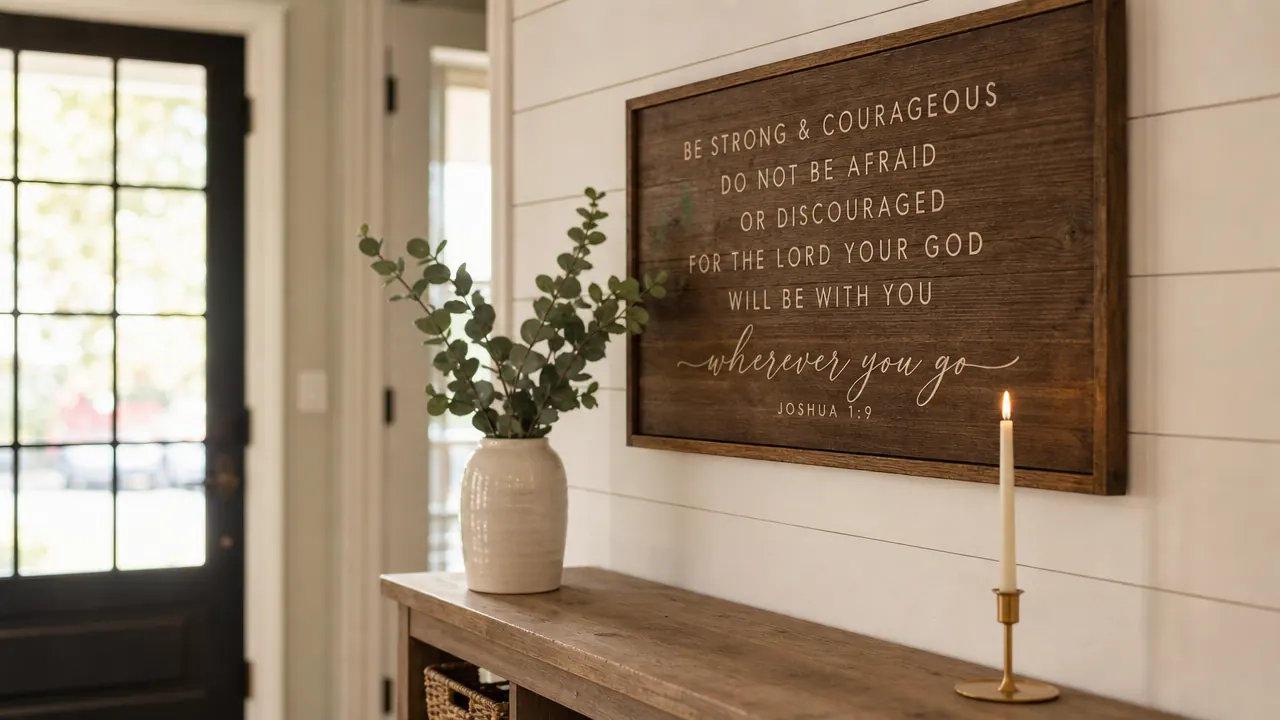
If your faith-based wall decor has ever felt like a collection of things that landed on the wall rather than a deliberate statement, you are not alone. I have been in hundreds of Christian homes over the years, and the pattern I see most often is not too little scripture on the walls. It is too much, competing with itself. Three signs at different heights, four different fonts, two crosses of mismatched scale, and a cross-stitched Psalm from 1987 that nobody has the heart to move. The room is full of faith and somehow feels cluttered with it.
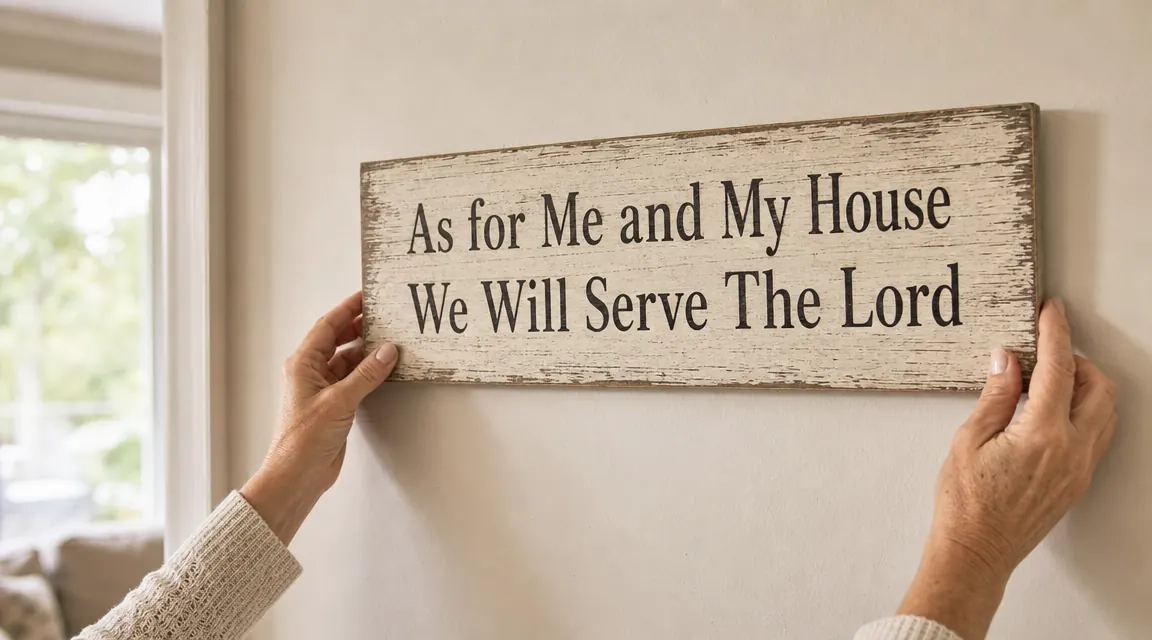
The BELLOWDEER 'As for Me and My House' sign changed how I think about this problem. It is not an expensive piece. But it is specific: one verse, one clean typeface, one warm wood-look finish that coordinates with almost any neutral palette. It made me realize that the right anchor piece is not about spending more. It is about choosing well and placing deliberately. The five steps below are the framework I now share with anyone who asks me how to bring scripture into their home without it feeling like a gift-shop exploded on their walls.
Your entryway deserves a verse that means something, not one that blends into the background
The BELLOWDEER 'As for Me and My House' sign is the anchor piece I recommend most often for entryways and living rooms. Clean typography, warm finish, ready to hang straight out of the box.
Amazon Check Today's Price on Amazon →Step 1: Choose One Verse Per Room and Commit to It
The single most common mistake in Christian home decorating is treating every room like a study Bible, with multiple passages vying for attention at once. Each room should have one verse that sets the tone for that space, chosen because it fits the purpose of the room, not because it arrived in a gift bag or looked good at the store.
The entryway is the natural home for a declaration verse: something about the household's commitment, its identity, who this family serves. Joshua 24:15 ('As for me and my house, we will serve the Lord') has been pinned to front doors and entry walls for centuries because it is a threshold verse. You say it going out and coming in. The kitchen might hold something about daily bread, or provision, or hospitality. A child's bedroom might hold Psalm 91 or Proverbs 3:5-6. The living room is communal and can hold something broader about love or peace. Decide the verse first. Then find the art. Not the other way around.
If you already own pieces that feel disconnected, this exercise will help you sort them. Some will find their right room. Some will go into a box for gifting. That is not waste. That is curation.
Step 2: Match the Scale of the Sign to the Scale of the Wall
A small sign on a large wall disappears. A large sign on a small wall crowds the room. This sounds obvious until you are standing in the aisle of a home goods store holding something that feels substantial in your hands but will look tiny above your sofa at home.
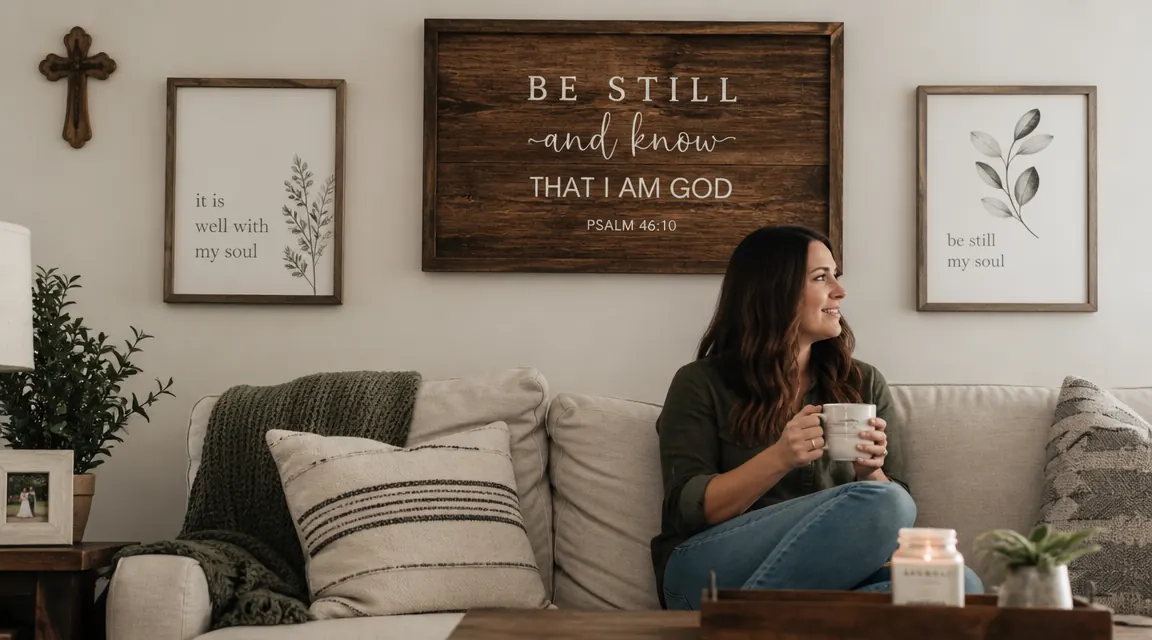
The BELLOWDEER sign measures approximately 15 by 10 inches, which places it in the sweet spot for entryways, above a console table, on a gallery wall, in a kitchen nook, or above a fireplace mantel on a smaller wall. For a large blank living-room wall, it works best as the centerpiece of a gallery arrangement rather than a standalone piece. Plan the layout on the floor before putting anything on the wall. Lay out the sign and any companion pieces (a simple cross, a framed photo, a small botanical print) and adjust the spacing until the grouping feels balanced. Then transfer it to the wall using painter's tape to mark positions before you drive a single nail.
A rule of thumb for wall coverage: a single piece or grouped arrangement should fill roughly 60 to 75 percent of the wall width it anchors. Below a 60-inch sofa, you want the total art width to sit somewhere between 36 and 45 inches. The BELLOWDEER sign at 15 inches alone would read as a small accent. Paired with two flanking pieces, it anchors the wall.
Step 3: Hang at Eye Level, Not at Crown Molding Level
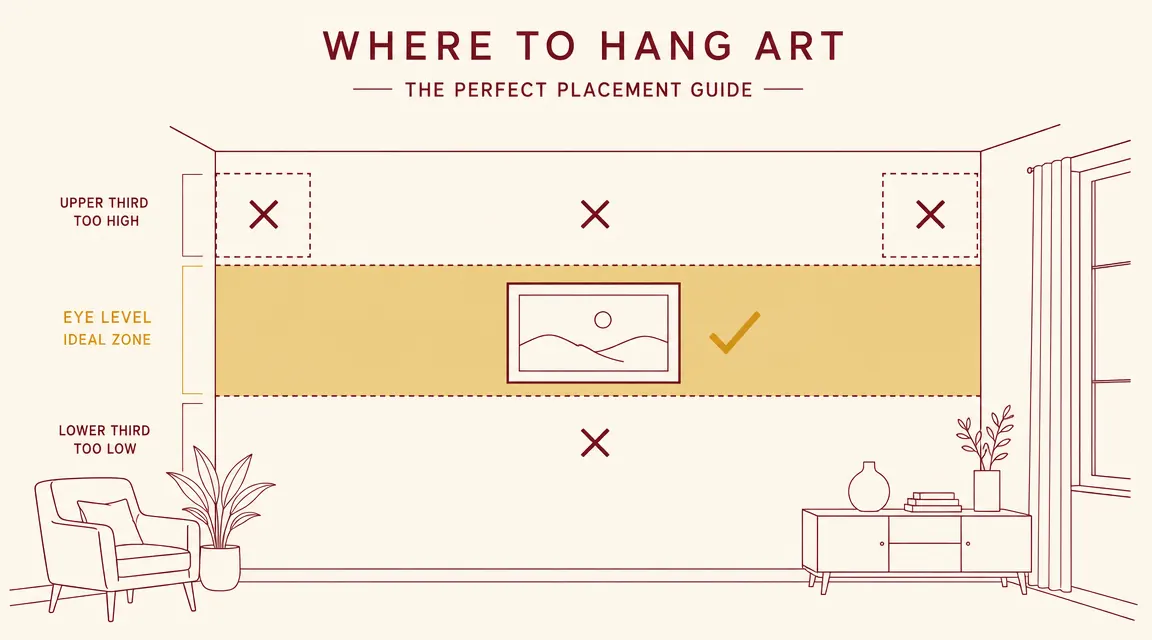
Most homes have wall art hung four to six inches too high. The standard guidance from interior designers is to center art at 57 to 60 inches from the floor, which is roughly average seated-to-standing eye level. When art is hung near the ceiling, the viewer's eye has to travel up to read it, which creates visual disconnection. You want a verse to meet you where you stand, not make you crane your neck.
The BELLOWDEER sign comes with a sawtooth hanger on the back, which makes single-nail hanging straightforward. For a crisp result, hold the sign against the wall at your intended height, mark the top edge lightly with a pencil, then measure down to find the nail point based on the hanger position. The sign includes basic mounting hardware in the box. If you are placing it in a gallery arrangement with other pieces, hang the anchor piece (the sign) first and build outward from it.
Step 4: Coordinate With the Room's Existing Palette, Not Against It
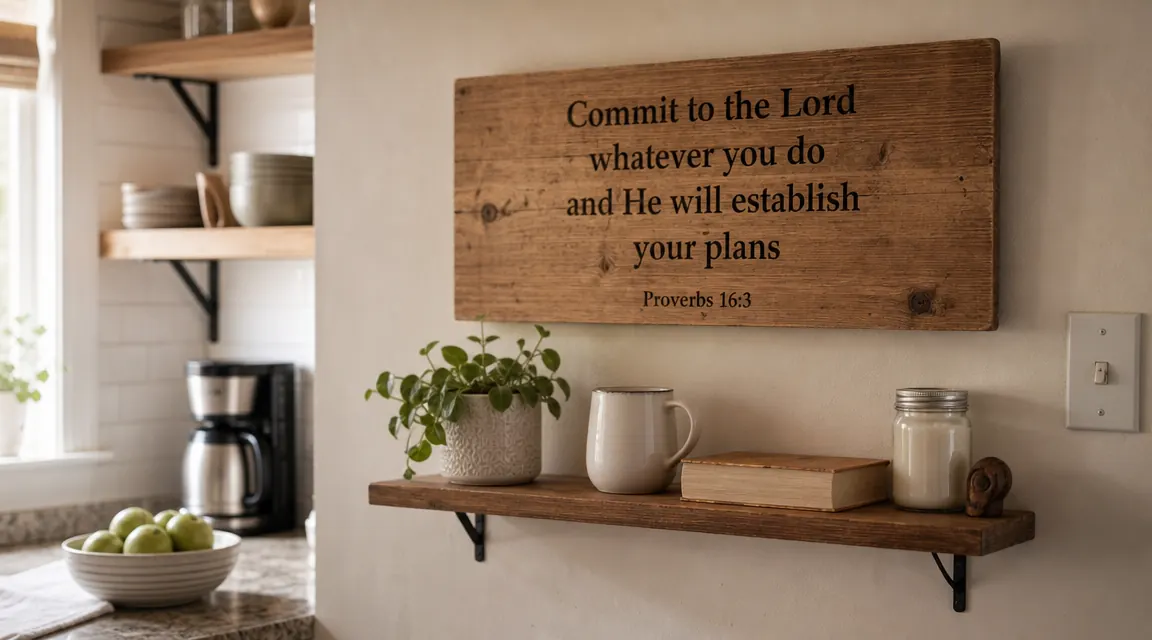
One reason the BELLOWDEER sign works in so many homes is that its finish reads as a warm, natural wood tone, which coordinates with almost every neutral palette currently popular in Christian household decor: white shiplap, greige walls, warm beige, natural linen, and medium-toned wood furniture. It does not fight with farmhouse, with transitional, or with the kind of understated traditional that shows up in most faith-forward homes.
Where it struggles: very cool-toned spaces with gray walls, chrome fixtures, and white-and-gray furniture. In those rooms, the warm wood tone can feel slightly at odds with the surroundings. The fix is simple: pair it with a creamy candle, a wooden frame on a nearby photo, or any warm-toned accent that bridges the gap. You do not need to redecorate. You need one or two transition pieces.
For typography coordination: the BELLOWDEER sign uses a clean, legible script for 'As for Me and My House' and a slightly bolder serif for the second line. If you are creating a gallery arrangement around it, choose companion pieces with either a matching script or a simple serif. Avoid mixing three or more distinct typeface styles in one arrangement. Two is the maximum before it reads as chaotic.
Step 5: Edit the Walls Before You Add Anything New
Before you hang one more piece, take everything down from one wall in the room you are working on. Look at the blank space. Then put back only the things that genuinely serve the room: in terms of meaning, in terms of scale, in terms of palette. What you add next should feel chosen, not accumulated.
This is where many Christians find the process meaningful in a way that goes beyond interior design. Deciding what verse belongs in your kitchen is a faith conversation, not just an aesthetic one. Deciding that the cross you have had for fifteen years still deserves its place is an act of intention. And deciding to let go of the piece that came from an obligation purchase rather than a real connection is actually freeing.
The BELLOWDEER sign functions well as the first anchor piece in this editing process because it is specific enough to mean something (Joshua 24:15 is not a generic feel-good verse, it is a covenant statement) and neutral enough in its design that it does not force the rest of the room's decor into a particular era or aesthetic. Start with it. Build around it. Leave breathing room.
The goal is not to remind visitors that this is a Christian home at every turn. It is to create an environment that, over time, reminds the people who live there.
What Else Helps
A few additional notes for specific situations I hear about often. For rental homes and apartments where wall damage is a concern, the BELLOWDEER sign is light enough to hang with a single large adhesive strip rated for 5 to 10 pounds. Test the strip on a hidden area of your wall paint first. For gifting this sign as a housewarming gift (which is one of my most recommended uses for it), pair it with a handwritten note referencing the verse. The combination of the physical sign and the personal note lands in a way that a gift card does not. For small apartments where even one piece of wall art feels like too much, a single scripture sign on a narrow entryway wall or above a small console table is exactly the right scale, and the sign is proportioned for it.
For anyone working with an existing collection of faith-based wall decor that feels inconsistent, the editing framework above is more useful than buying anything new. Get everything off the wall first. Then reintroduce pieces intentionally. Most people find they had better pieces than they realized once they stopped letting everything compete.
If you start with one sign, this is the one worth starting with
The BELLOWDEER 'As for Me and My House' sign is rated 4.7 stars by nearly 2,000 buyers. Ready to hang straight out of the box, warm wood-look finish, and one of the most meaningful verses for a home entrance. Check current availability on Amazon.
Amazon Check Today's Price on Amazon →